
Caring for Your Gastrostomy (G-Tube)
This guide will help you care for your tube and feed yourself safely at home.
Chaxx Nutrition
7/1/20263 min read
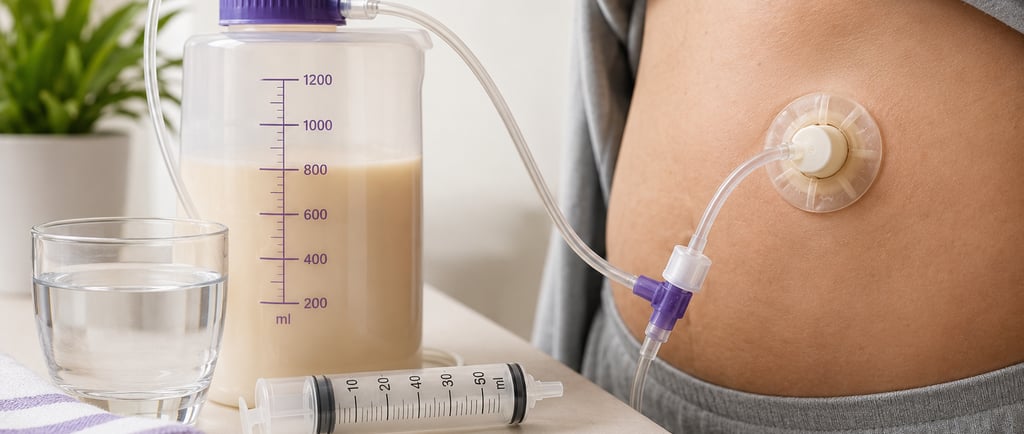
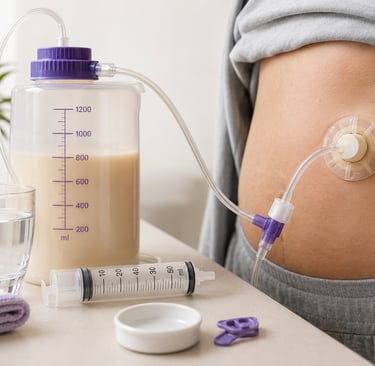
Your Guide to Feeding and Tube Care
Having a gastrostomy (G-tube) may feel overwhelming at first, but with a little practice it will become part of your daily routine. The tube helps you receive the nutrition, fluids, and medicines your body needs when eating by mouth is difficult or unsafe.
What Can Be Given Through a G-Tube?
Your G-tube can be used for:
Prescribed liquid feeds (formula)
Water
Liquid medications (only if approved by your healthcare provider)
Homemade blended feeds (only if recommended by your dietitian)
Never put solid food, crushed tablets (unless instructed), or thick mixtures into the tube because they may block it.
Your Diet
Your body needs a balanced diet to stay healthy and heal properly.
A healthy tube feeding should provide:
Energy from carbohydrates
Protein for healing and muscle strength
Healthy fats
Vitamins and minerals
Plenty of fluids
Your dietitian will recommend the best feeding plan for your needs.
Using Commercial Formula
Commercial formulas are specially designed to provide complete nutrition.
Always:
Check the expiry date.
Shake the container well.
Use the feed at room temperature.
Refrigerate opened containers and use within 24 hours.
Homemade Blended Feeds
If your healthcare team has advised homemade feeds, ensure they are:
Smooth and lump-free
Well blended
Strained if necessary
Freshly prepared
Stored safely in the refrigerator for no longer than 24 hours
A balanced homemade feed may include:
Cooked maize meal, rice, oats or potatoes
Lean chicken, fish, eggs or beans
Vegetables such as carrots, pumpkin or spinach
Fruits such as bananas, apples or pawpaw
Healthy fats such as vegetable oil or avocado
Always blend thoroughly until completely smooth.
How Much Should You Feed?
Your doctor or dietitian will prescribe the amount that is right for you.
As a general guide for adults receiving bolus feeds:
Volume per feed: 200–400 mL
Number of feeds: 4–6 times each day
Water flush before feeding: 30–60 mL
Water flush after feeding: 30–60 mL
Do not give large amounts quickly.
Each feed should take about 15–30 minutes.
If you use a feeding pump, follow the prescribed rate.
Drinking Water
Water is very important.
Unless your healthcare provider has restricted your fluids:
Flush the tube before and after every feed.
Flush before and after medications.
Drink fluids by mouth if it is safe for you to swallow.
How to Feed Through the Tube
Wash your hands with soap and water.
Prepare your feed.
Sit upright or raise the head of the bed at least 30–45 degrees.
Flush the tube with water.
Give the feed slowly.
Flush again with water after feeding.
Stay sitting upright for at least 30–60 minutes after feeding.
This helps prevent reflux, nausea and choking.
Caring for Your Tube
Every day:
Wash your hands before touching the tube.
Clean the skin around the tube with warm water and mild soap.
Dry the area well.
Check for redness, swelling or leaking.
Rotate the tube daily if your healthcare provider has instructed you to do so (only after the site has healed and if your tube type allows it).
Keep the tube secured to avoid pulling.
You usually do not need a dressing unless your healthcare provider recommends one.
Preventing Tube Blockage
To keep the tube working well:
Flush with water before and after every feed.
Flush before and after each medication.
Give medicines separately.
Use liquid medicines whenever possible.
Never mix medicines into the feed.
Never force water into a blocked tube.
If the tube becomes blocked, contact your healthcare provider.
Taking Medicines
Always ask your healthcare provider or pharmacist before putting medicines into the tube.
Remember:
Liquid medicines are preferred.
Give one medicine at a time.
Flush the tube between medicines.
When Should You Seek Medical Help?
Contact your healthcare provider immediately if you notice:
Fever
Increasing pain around the tube
Redness that spreads
Swelling
Pus or foul-smelling drainage
Heavy bleeding
Tube blockage that cannot be cleared
Tube falls out
Persistent vomiting
Severe diarrhoea
Large amounts of leakage around the tube
Difficulty breathing during feeding
Do not try to replace the tube yourself unless you have been trained.
Helpful Daily Tips
Feed at about the same times every day.
Store feeding equipment in a clean place.
Replace syringes and feeding sets as instructed.
Keep a record of your feeds, water intake and weight.
Wash reusable equipment thoroughly after each use.
Attend all follow-up appointments with your healthcare team.
Frequently Asked Questions
Can I shower?
Yes. Once the insertion site has healed, you can usually shower. Dry the area gently afterwards. Avoid swimming until your healthcare provider says it is safe.
Can I eat by mouth?
Some people can eat normally, while others cannot. Follow the advice of your doctor or speech therapist.
Will the tube hurt?
You may have mild discomfort at first, but ongoing pain is not normal. Report persistent pain to your healthcare provider.
Remember
Your gastrostomy tube is helping your body receive the nutrition and fluids it needs. Good hygiene, proper feeding techniques and regular tube care will help prevent complications.
If you are ever unsure about feeding, medications or tube care, contact your healthcare provider or dietitian before making changes.
With the right care, most people live comfortably and confidently with a gastrostomy tube.
Connect
Follow us on our social media for tips.
© 2023. All rights reserved.
Get wellness tips and product picks weekly